SEO & AEO Services
We help SaaS and enterprise brands earn visibility for the questions their buyers search the most.


OUR CLIENTS
Trasted by fast-growing SaaS and enterprise brands


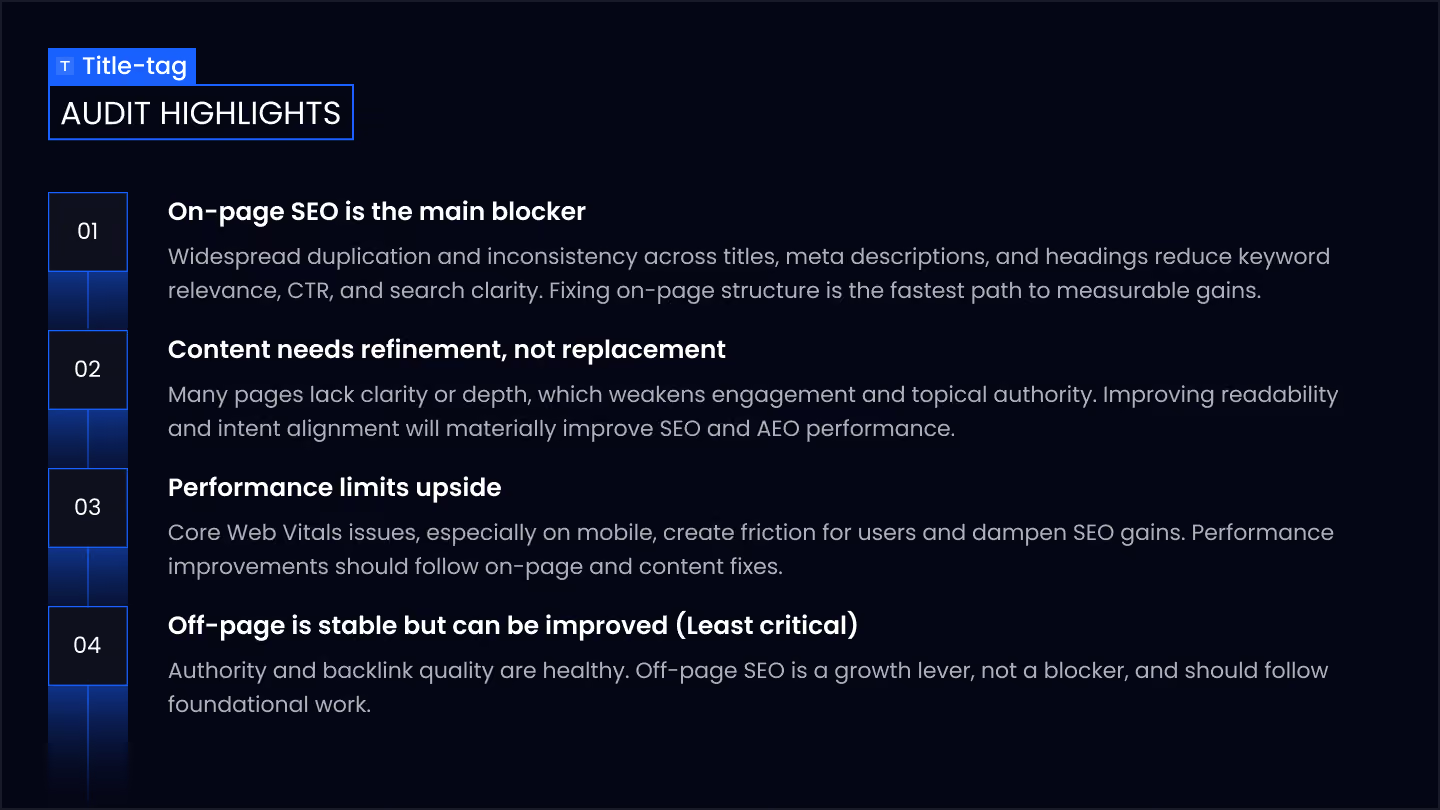


SEO Service & Support for B2B Software
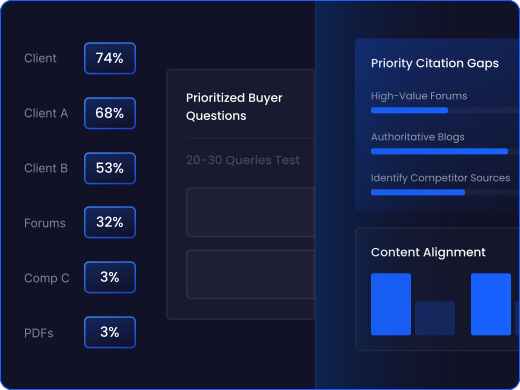
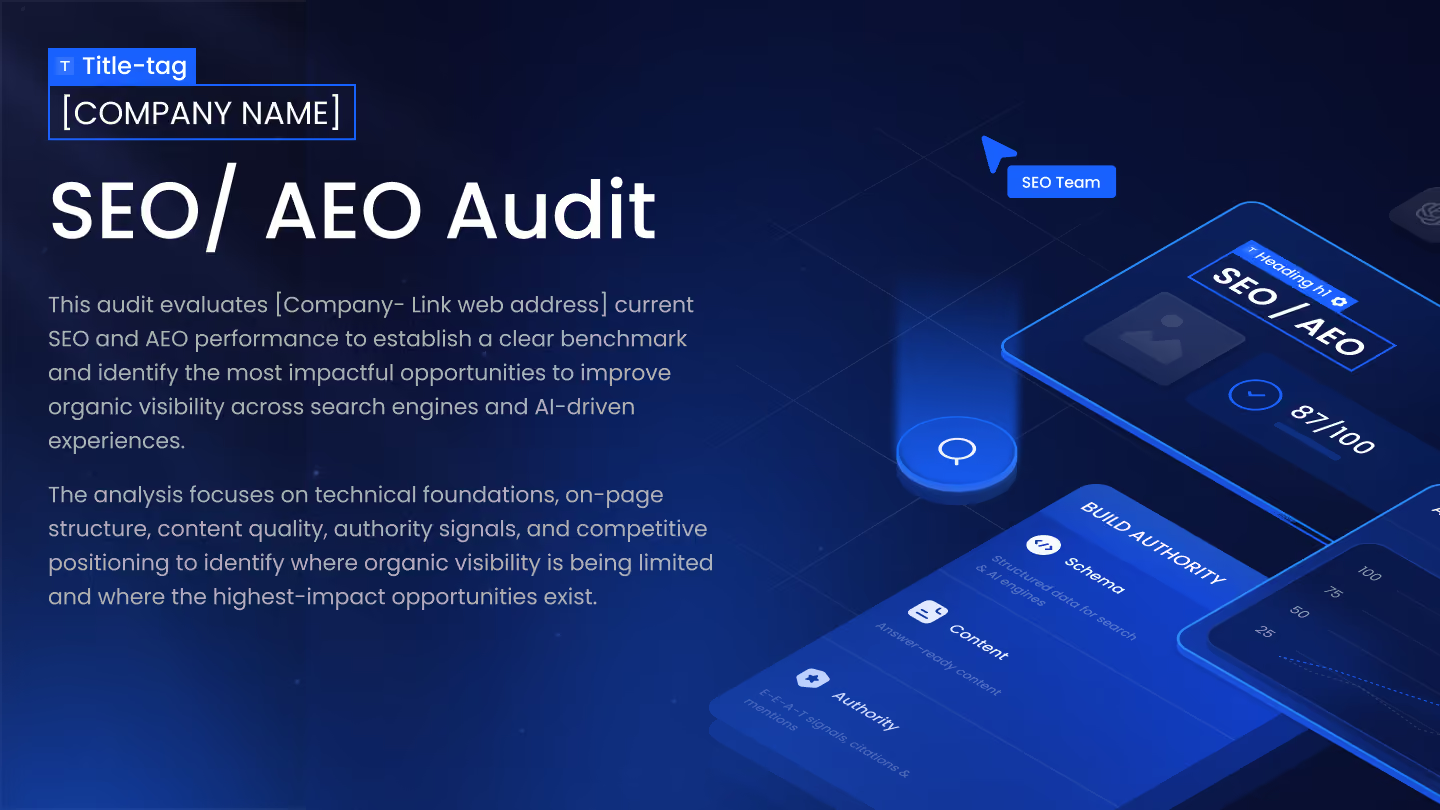
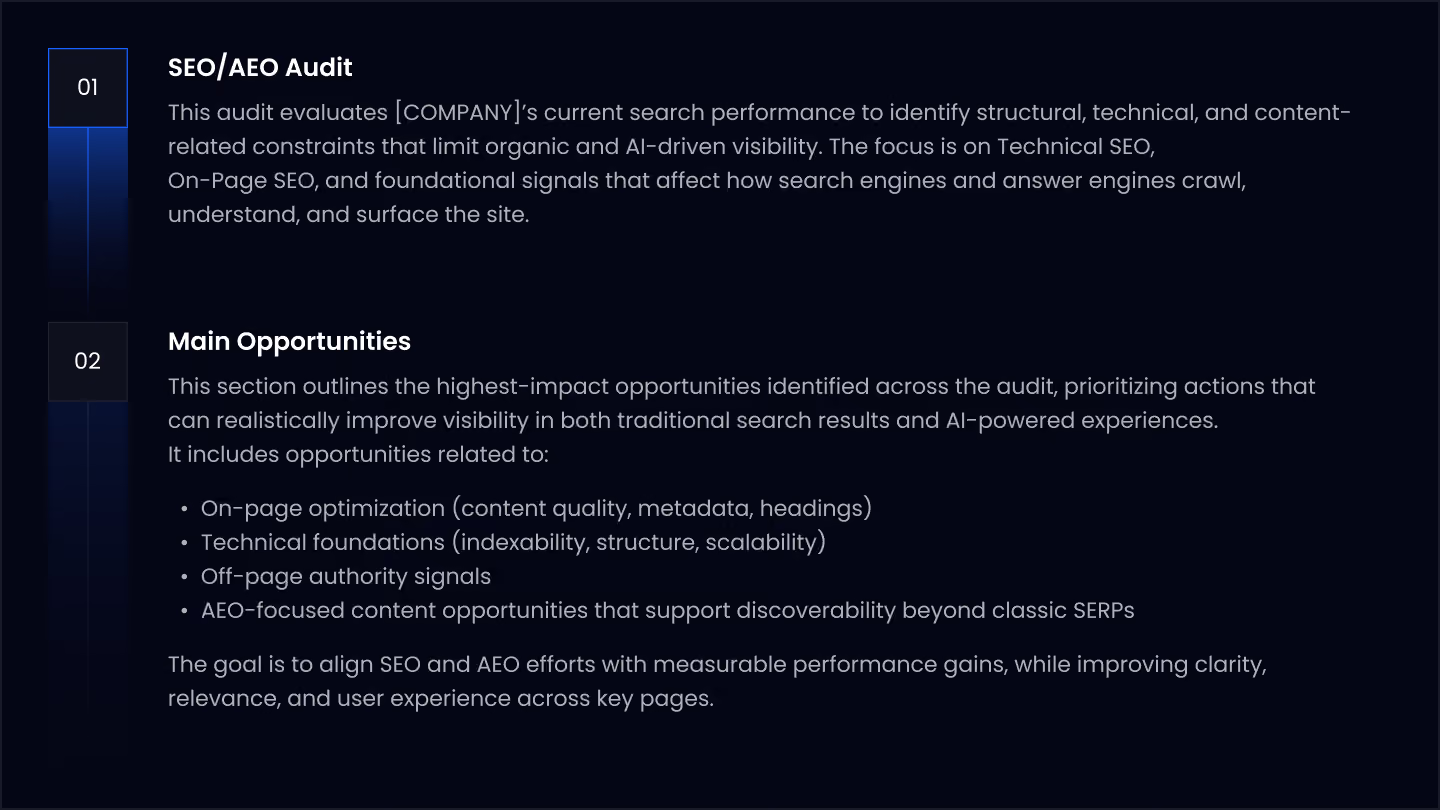
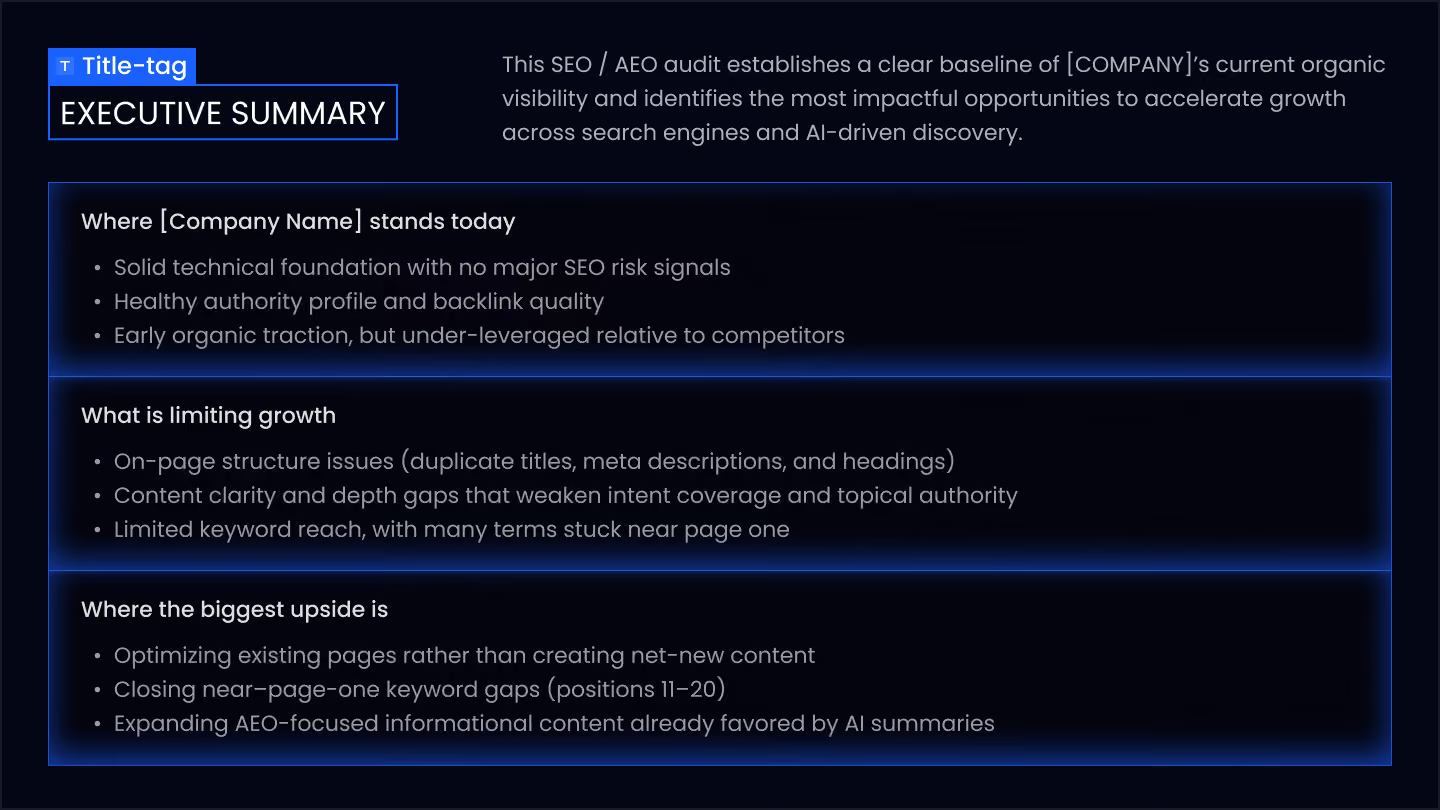
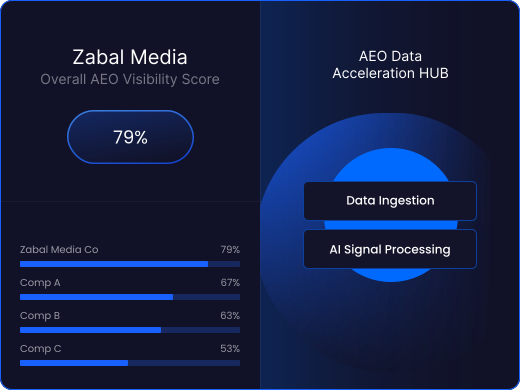
SEO/AEO Audit & Visibility Mapping
Before we optimize anything, we measure where your brand actually appears in AI answers today, and where competitors are taking your spot. Our audit benchmarks visibility across ChatGPT, Perplexity, Google AI Overviews and Bing Copilot.
- AI Visibility Audit: Test 20–30 buyer queries across major answer engines to see whether your brand is mentioned, cited or ignored.
- Competitive Citation Analysis: Identify which competitors are named in AI answers for the categories you care about, and why.
- Question Map: Build a prioritized list of buyer questions your brand must own across awareness, consideration and decision stages.
- Topical Coverage Gaps: Pinpoint subjects, comparisons and use cases where your content is too thin to be quoted.
- Baseline Reporting: Establish measurable starting points for citations, mentions and AI visibility so progress is provable, not anecdotal.
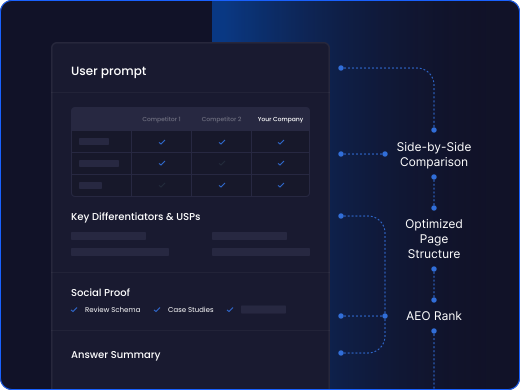
Structured Content & Schema
AI engines reward content they can parse cleanly. We rebuild your most important pages so machines can ingest them, classify them correctly and pull from them with confidence.
- Schema Implementation: Deploy FAQ, HowTo, Article, Product and Organization schema markup across high-intent pages.
- Answer-Ready Formatting: Restructure content into concise direct answers (40–60 words), Q&A blocks, comparison tables and step-by-step guides.
- Semantic Content Modeling: Build Webflow CMS structures that enforce consistent metadata, author bylines, publish dates and source citations.
- Internal Linking Architecture: Create topical clusters and pillar pages that signal subject authority to both Google and AI sourcing models.
- Technical Crawlability: Audit and fix robots.txt, llms.txt, sitemap, canonical and indexation issues that block AI crawlers.
Answer-Ready Content Strategy
Most B2B content was written to fill a calendar, not to answer a question. We rewrite, restructure, and produce the content that AI engines are actively looking for.
- Buyer Question Hubs: Build dedicated content clusters around the 20–30 questions your prospects actually ask AI tools.
- Comparison & Alternatives Pages: Produce structured "X vs. Y" and "alternatives to X" pages that AI engines disproportionately surface.
- Expert-Led Thought Leadership: Pair subject-matter experts with our writers to publish content with named authors, credentials and citations.
- Content Refresh & Restructure: Rework existing high-traffic pages into answer-ready formats so your historical SEO equity carries into AEO.
- Proof-Point Engineering: Embed quantified outcomes, customer evidence and verifiable data so AI summaries quote the numbers that close deals.
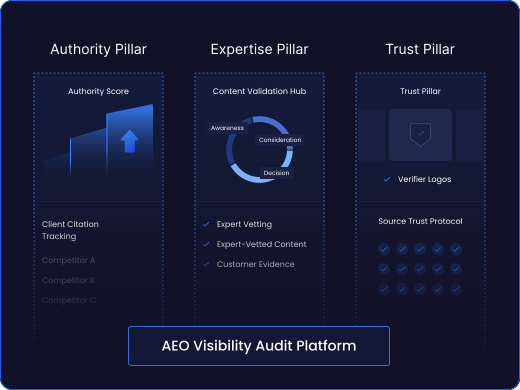
Authority & E-E-A-T Signals
AI engines don't just look at what you say, they look at who's saying it and who's vouching for you. We engineer the signals that move your brand from "a result" to "the answer."
- Author & Expert Pages: Build credible author bios with verified credentials, publication history and external proof.
- Citation & Source Strategy: Cite reputable third-party data inside your content and earn citations from trusted publishers in return.
- Brand Mention Monitoring: Track unlinked brand mentions across the open web, as these still influence how AI systems perceive your authority.
- Trust UX Patterns: Surface customer logos, testimonials, certifications and case study links in locations that signal credibility to readers and crawlers.
Measurement & Ongoing Optimization
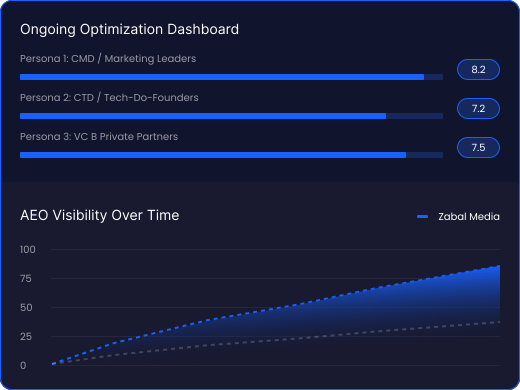
AEO/SEO isn't a one-time project, it's a discipline. We instrument your visibility, monitor the answer engines weekly, and iterate on the content and structure that compound your share of voice over time.
- AI Citation Tracking: Monitor how often, and in what context, your brand is cited across ChatGPT, Perplexity, Google AI Overviews and Bing Copilot.
- Hybrid SEO + AEO Reporting: Combine traditional rankings, organic traffic, and AI mentions into a single dashboard for leadership.
- Quarterly Content Tuning: Refine answer formats, schema, and structure based on which pages are actually getting cited, and which aren't.
- New Engine Adaptation: Stay current as new answer engines, AI Overview features, and ranking shifts roll out before competitors do.
- Executive Reporting: Deliver concise monthly readouts in the language CMOs, founders and boards speak: pipeline, share of voice and market position.
What to expect from day one
Audit
We benchmark your current visibility across ‘traditional’ search engines and LLMs (ChatGPT, Perplexity, Google AI Overviews and Bing Copilot). You get a gap report and a prioritized question map before anything else is touched.
Build
Schema deployment, answer- ready content production, technical crawlability fixes and E-E-A-T signal engineering across your highest-priority pages.
Launch
First citation movements appear. We monitor, report, and make targeted adjustments based on which engines are picking up your content and in what context.
Compound
Ongoing content expansion, schema refinement and new engine adaptation as the AI search landscape continues to shift. Monthly executive reporting throughout.

What we can help you achieve
Visibility inside AI answers
Move from invisible to indispensable in the answer engines your buyers already use. By optimizing how AI systems source, parse and cite your content, we put your brand in the conversation before a prospect ever opens a search results page.
.png)
Future-proof search strategy
Protect the SEO equity you've already built while securing the visibility layer that's coming next. Our hybrid approach treats SEO as the foundation and AEO as the edge, so a shift in any single channel doesn't take your pipeline with it.
.png)
Authority that compounds
Strong E-E-A-T signals like expert authors, structured data, trusted citations and real proof points don't just help one page. They raise how every AI system weights your brand across every related topic, building a moat that grows over time.
.png)
Decisions backed by real data
We measure what most agencies still ignore: how often you're cited, in which answer engines, for which queries and against which competitors. That visibility data drives every decision so your investment is always pointed at the highest-leverage gap.
.png)


.svg)


.avif)


Not only they do an exceptional job, but they care about taking design and functionality to a higher level. They care about delivering only what you need in the best possible way. That my close friend can expect only professionalism from the Zabal team.


Throughout the project, Zabal maintained open lines of communication, keeping us updated on the progress and incorporating our feedback seamlessly. It's rare to find a partner who not only delivers exceptional results but also values client collaboration as much as they do.


Zabal is easy to work with and offers a lot of value for the $ investment. They're a great Webflow shop and know how to make that platform work well for clients.


The team was incredible to work with, with such strong talent throughout the entire process from low fidelity, high fidelity design, all the way into development. If you're looking to revamp your website and have it convey your company in a 10x better light, work with Zabal!


Zabal is very knowledgeable about all things website dev and design. The company was always willing to provide solutions to any potential roadblocks we encountered and worked very hard to help us meet our launch timeline.


Frequently asked questions
Like what you see? Don't let your website idle another day
START A PROJECT